
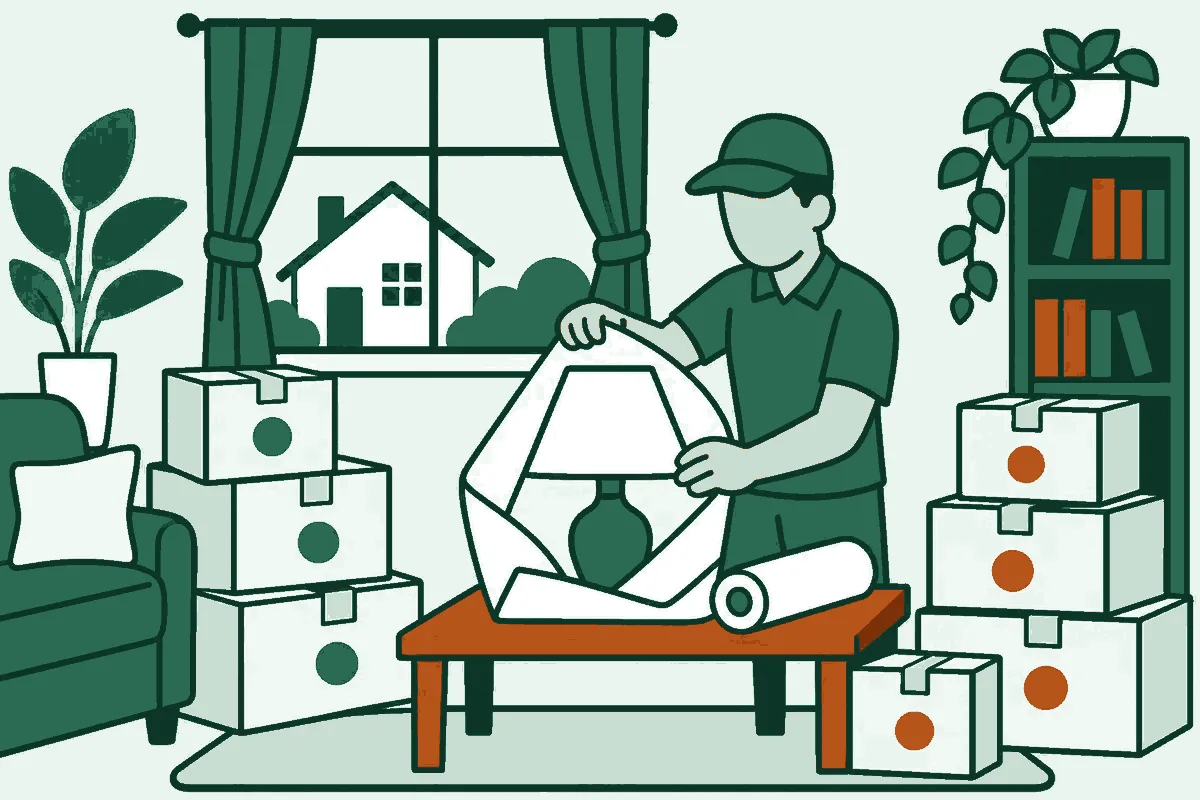
Packing is the part of a move that people underestimate most. A typical two-bedroom home in Santa Rosa holds far more than it seems, and the boxes do not pack themselves in a weekend. A room-by-room plan turns one huge task into a series of small, finishable ones. This guide shows the order that works, the supplies to gather and the details to share with your mover so the estimate matches your real move.
Start with the rooms you use least
Begin about three weeks before moving day with the places that do not affect daily life: the garage, the attic, a guest room, hall closets and anything stored under beds. These rooms are full of items you can sort quickly, and they are where most people find things to donate.
Make three piles as you go: keep, donate and toss. If you are unsure about an item, put it in one review box and decide at the end. Sorting while you pack is far better than moving things you do not need, because every box you skip is time and money saved on moving day.
Gather boxes and supplies before you pack
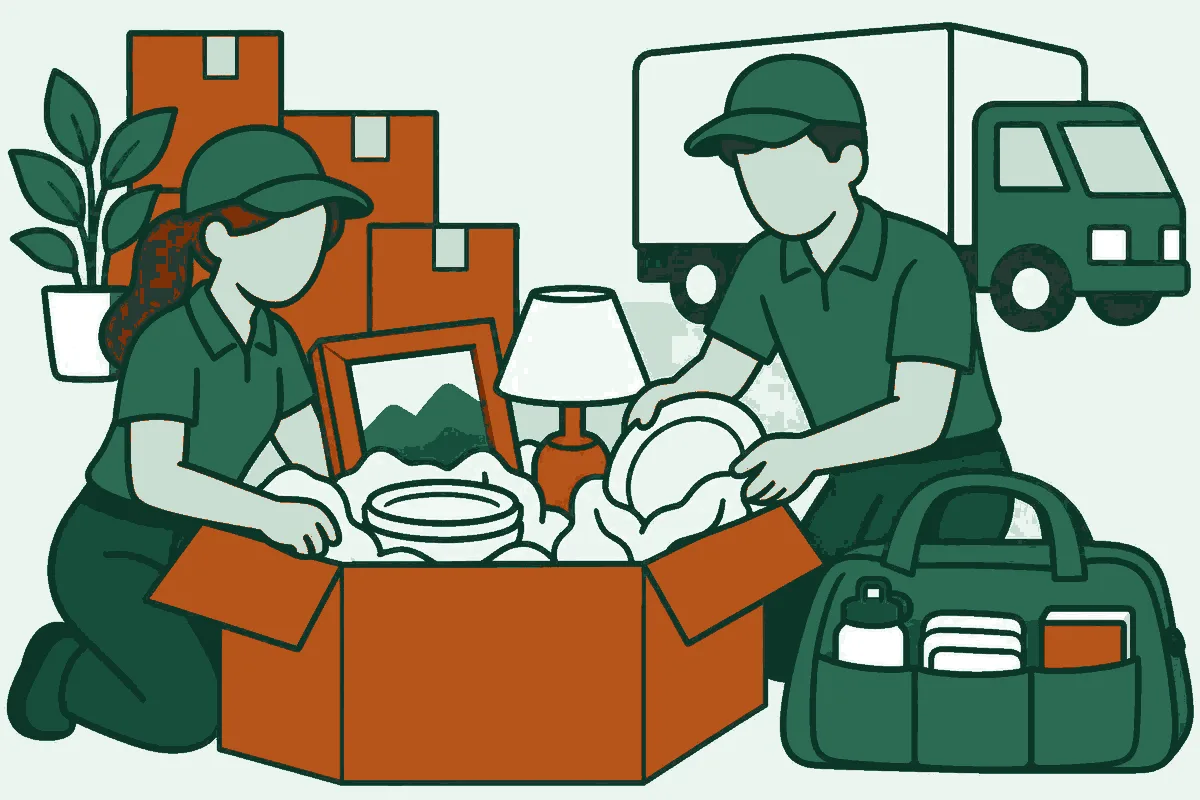
Buy or borrow supplies before you start so you do not stop mid-room. You need small boxes for books and heavy items, medium boxes for kitchen and decor, large boxes only for light things like pillows, plus packing paper, tape, markers and a few wardrobe boxes. Sturdy used boxes work well if they are clean and dry.
- Small boxes for books, tools and canned food
- Medium boxes for kitchenware, decor and shoes
- Large boxes only for bedding, pillows and lampshades
- Packing paper, tape, markers and labels
- A box cutter and a few trash bags
Great Rate Moving can bring boxes and paper if you would rather not shop. Supplies are listed as a separate line in the written estimate, so you can see the cost and decide.
Pack in a sensible order
After the low-use rooms, move on to books, wall art, out-of-season clothes and the parts of the kitchen you rarely use. Pack the living room and dining room next, then the bedrooms. Leave the bathroom, the coffee maker, a few plates and your daily clothes for the last two days.
Keep heavy items low and light items high in every box. A box of books that weighs 50 pounds is hard to carry up the stairs of a Petaluma Victorian or a second-floor apartment near Rohnert Park. If you can lift it with one hand without effort, the weight is about right.
Label every box so the crew knows where it goes
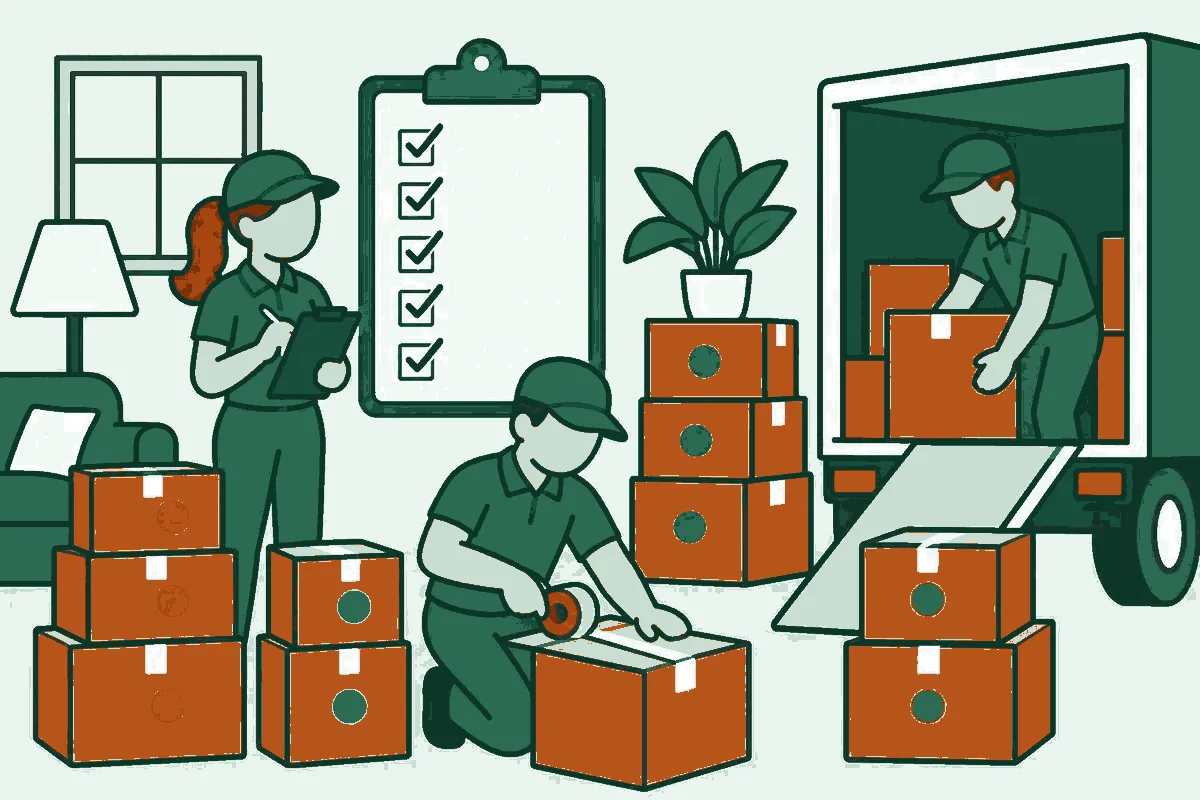
Write the destination room on two sides of each box, not just the top. Add a short note of what is inside, such as kitchen pots or office cables. Mark fragile boxes clearly and keep them upright. Color tape by room is a simple system that works even if the crew is moving quickly.
Create a first-night box for each person with medication, chargers, a change of clothes, toiletries and a few basic tools. Carry it with you instead of putting it on the truck. You will be glad to have it when the truck arrives late or the new kitchen is still full of boxes.
Packing checklist by room
- Kitchen: wrap plates vertically, nest bowls, keep knives sheathed and label glass as fragile
- Living room: remove lamp shades, wrap frames and mirrors, and tape cables to each device
- Bedrooms: leave clothes in drawers only if the dresser is light, and bag shoes and hangers
- Bathroom: seal liquids in plastic bags and pack medication yourself
- Garage: drain fuel from tools and do not pack paint, propane or other hazardous items
If a room will not be fully packed before the move, tell your mover. Great Rate Moving can add packing help by the hour at the crew rate, and a short call makes the schedule realistic.
What to tell your mover when you ask for an estimate
A good estimate reflects the real move. Tell the company how many rooms you are packing, what is already boxed, which large items need disassembly and whether there are stairs, a long driveway or tight parking at either address. Mention fragile items such as art, a piano or a glass cabinet.
Local moves with Great Rate Moving are priced at $145 per hour for 2 movers, $190 for 3 movers and $245 for 4 movers, with a 2 hour minimum. The more accurate your packing status and inventory are, the more accurate the hours in the estimate will be. For details on how we handle packing, see our packing and unpacking service.