
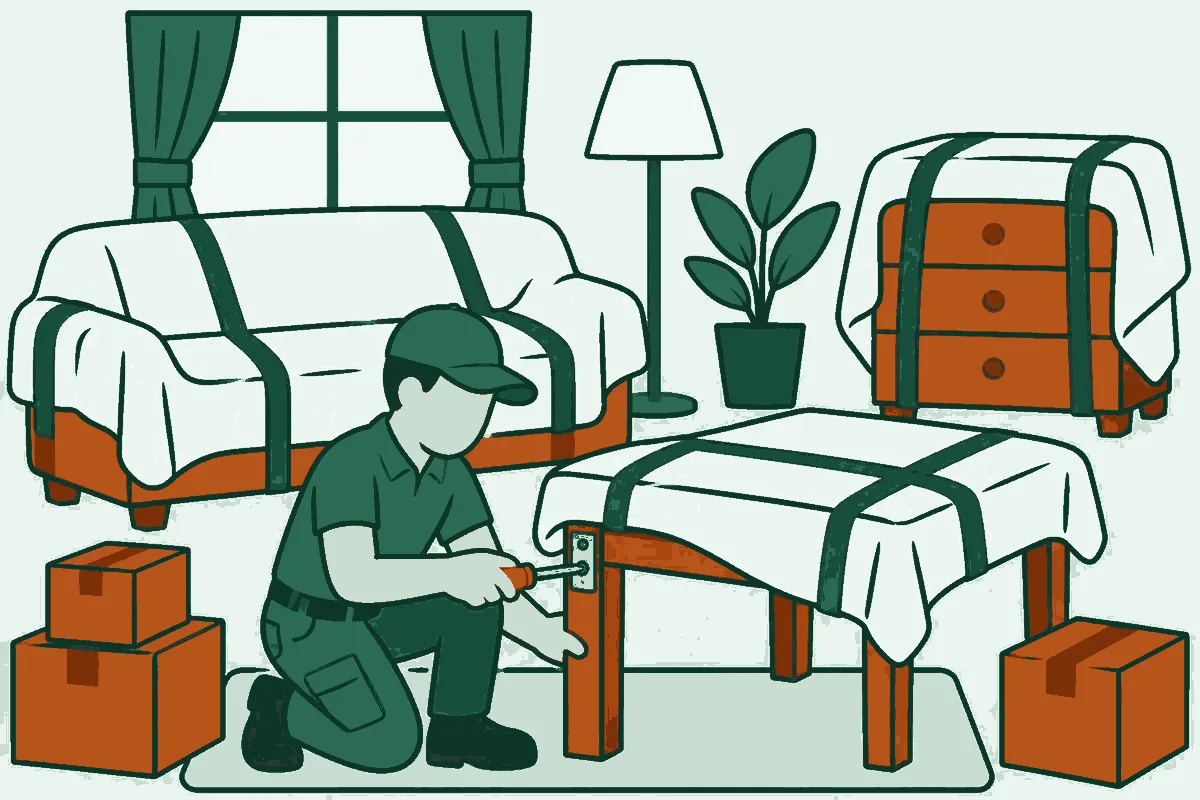
Furniture is the heaviest and most awkward part of most moves. A sofa that fit through the door ten years ago may not turn the corner in the hall, and an older home in Petaluma or Sebastopol can have narrow doors and steep stairs. Preparing furniture a few days before the crew arrives is the easiest way to avoid delays, scratches and surprises. Here is how to do it.
Make a short furniture list
Write one line per large piece: sofa, dining table, dresser, bed, desk, bookcase and so on. Add the room it is in, the approximate size and whether it comes apart. A list like this helps your mover size the crew and the truck, and it helps you decide what is worth moving.
Add a note for anything unusual: a glass-top table, a leather sectional, a vintage cabinet, a large mirror. These pieces need extra padding and sometimes a different carry plan, and they are the items that raise questions on the day if they are not listed.
Measure the route, not just the piece
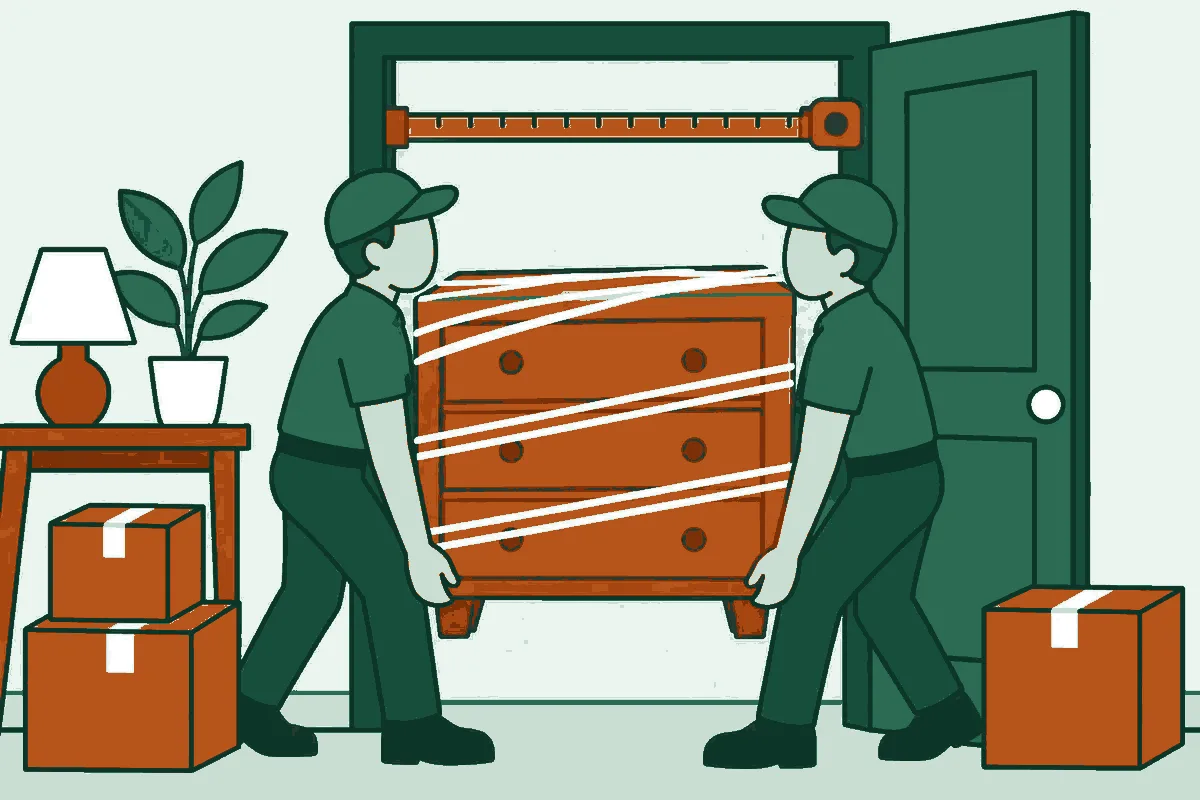
Measure the largest pieces and then measure the route from the room to the truck. Check door widths, hallway turns, stair width and any low ceilings. An older Santa Rosa home may have narrow interior doors, and a newer two-story home may have tight landings.
- Open the door fully and measure the clear opening, not the frame
- Measure hallways at the narrowest point and at each corner
- Check stair width and ceiling height on the way down
- Note any railings or fixtures that stick out
- Measure the destination room and the doors there too
If a piece does not fit, it is better to learn that before moving day. Ask your mover whether the crew can remove a door, take apart the piece or use a different route.
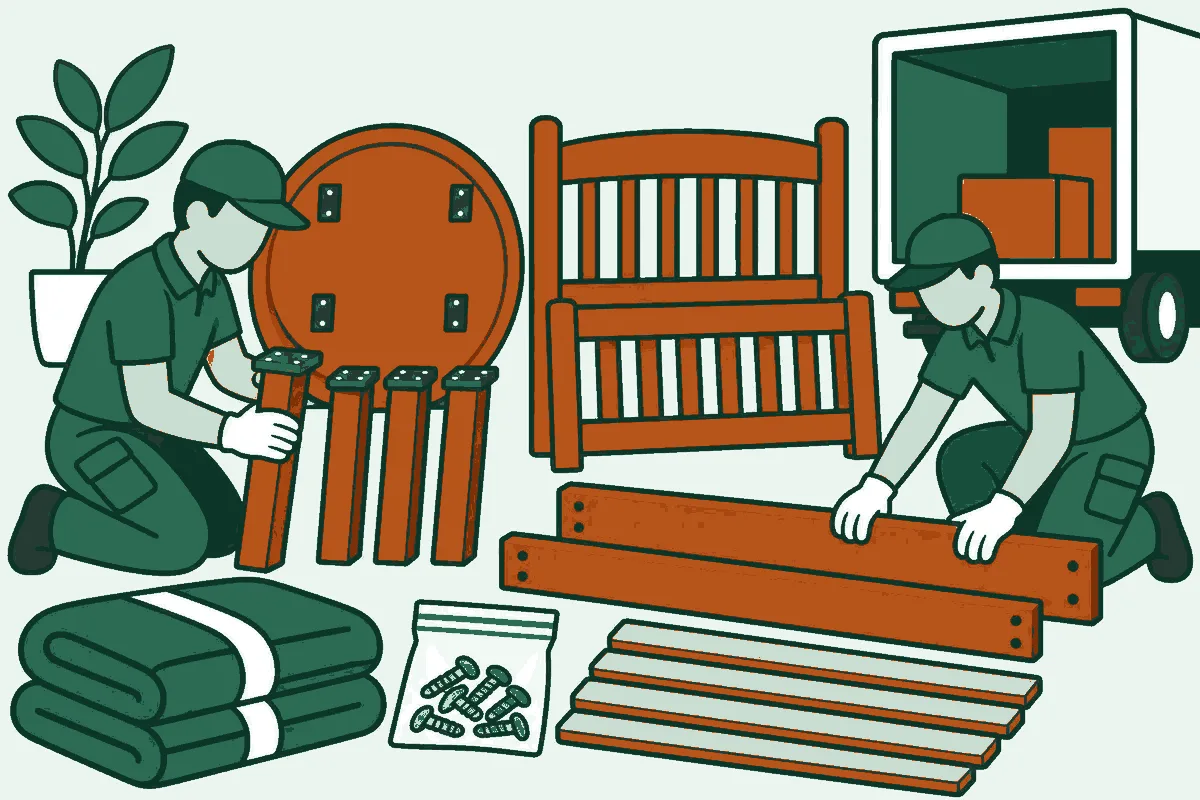
Take apart what comes apart
Remove legs from tables, take beds apart, detach shelves and pull drawers. Keep the hardware with the furniture: put screws and bolts in a labeled bag and tape it to the frame. Take photos of complex assemblies, such as bunk beds or modular desks, so you can rebuild them quickly.
Great Rate Moving can take apart and reassemble standard furniture. Tell us in advance if you have something that needs special tools or a technician, and we will plan the time and the crew.
Protect the furniture and the home
Furniture pads and stretch wrap protect surfaces and upholstery, and corner guards protect walls and doorways. If you are moving yourself, use moving blankets, not bedsheets, and wrap tightly so the pads do not slip.
Protect floors with runners or cardboard along the path, especially on hardwood and tile. In wet weather, we also lay down floor protection at the entrance and wipe the dollies so we do not track mud into your home.
Plan for heavy and delicate pieces
Pianos, safes, large TVs, glass cabinets and marble tops need a plan. Tell your mover about them at the start so the crew has the right equipment and enough hands. For pianos and heavy items, there is an added handling fee on top of the hourly rate, which is confirmed in the written estimate.
If you are not sure whether a piece is worth moving, compare the cost of moving it with the cost of replacing it. Large, low-value furniture is often cheaper to donate or sell than to move across the county.
How furniture affects the hours on the clock
The number of pieces, their weight and the stairs decide how long a move takes. A home with a heavy sectional, a king bed and a large dresser on the second floor will take longer than a home with the same number of boxes and lighter furniture. Preparing furniture ahead of time shortens the carry and keeps the hours down.
When you ask for an estimate, send photos of the biggest pieces and the route to the truck. We will tell you whether a crew of 2, 3 or 4 makes sense. The posted rates are $145, $190 and $245 per hour with a 2 hour minimum, and a larger crew can finish a heavy load in fewer hours.
Checklist for the morning of the move
- Clear paths, open doors and secure pets
- Place small items in boxes so they do not ride on top of furniture
- Keep drawers closed or locked and remove glass shelves from cabinets
- Leave the measuring tape and the hardware bags where the crew can find them
- Tell the crew which pieces go in which rooms at the destination
A prepared home helps the crew work faster, which keeps the hourly total down. Learn more about our residential moving service and how we plan a home move.